The deepest hot-water borehole ever drilled through a floating ice shelf. And a chain that did not pass.
A 999.8-metre hot-water borehole through the Thwaites Glacier ice shelf, in eight weeks aboard the RV Araon. The borehole succeeded. The instrument mooring did not. Both are recorded here.
Between December 2025 and February 2026, I served as Chief Scientist of an eight-week expedition aboard the RV Araon to the Thwaites Glacier — the West Antarctic ice mass whose collapse would raise global sea level by more than fifteen feet.
With colleagues from the British Antarctic Survey and the International Thwaites Glacier Collaboration, we drilled a 999.8-metre hot-water borehole through the floating ice shelf — the deepest of its kind ever achieved — and recovered the first turbulence and salinity measurements from the ocean cavity beneath this section of the glacier.
A single expedition is fleeting. The infrastructure of polar science is not.
The instrument mooring intended for permanent emplacement beneath the ice became wedged near the base of the borehole and could not be recovered. That failure — like all failures in polar science — has now been translated into protocol: the next attempt, in approximately four years, begins from a more advanced starting line than this one did.
The New York Times embedded a reporter and photographer aboard the Araon for the full eight weeks of the expedition. The resulting long-form profile, published May 2026, was the first character-driven feature on a working Korean scientist in a tier-one Western publication.
The Hole in the Ice at the End of the Earth
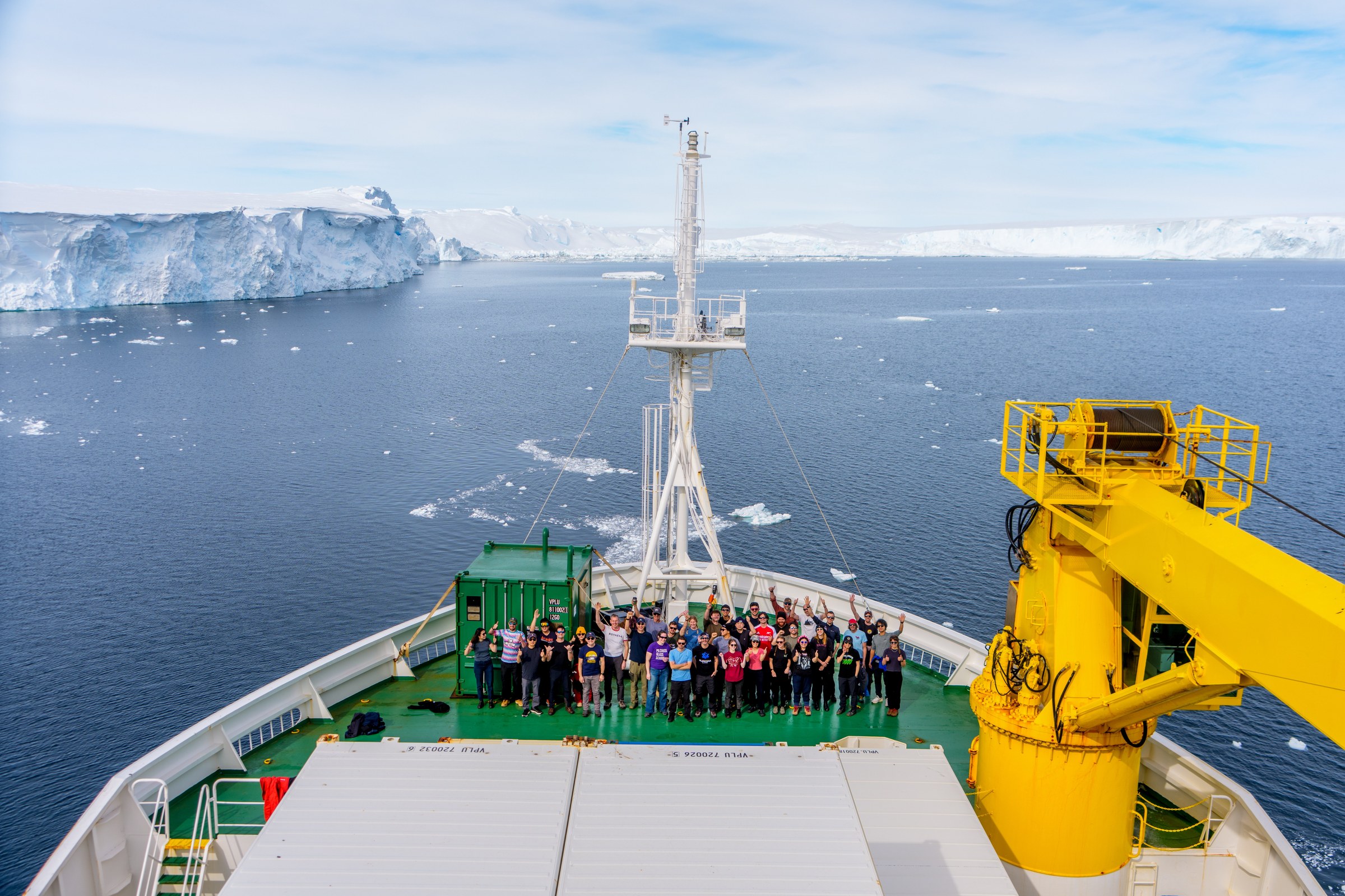
RV Araon, foredeck — the international team facing the Antarctic horizon at the close of the 2025–26 Thwaites Glacier expedition.