Polar science is a generational infrastructure. A single expedition is one point on a much longer line.
A throughline for the next decade of Korean polar science: build observational infrastructure, produce scientific knowledge the world cannot otherwise reach, and cultivate the researchers who will inherit both.
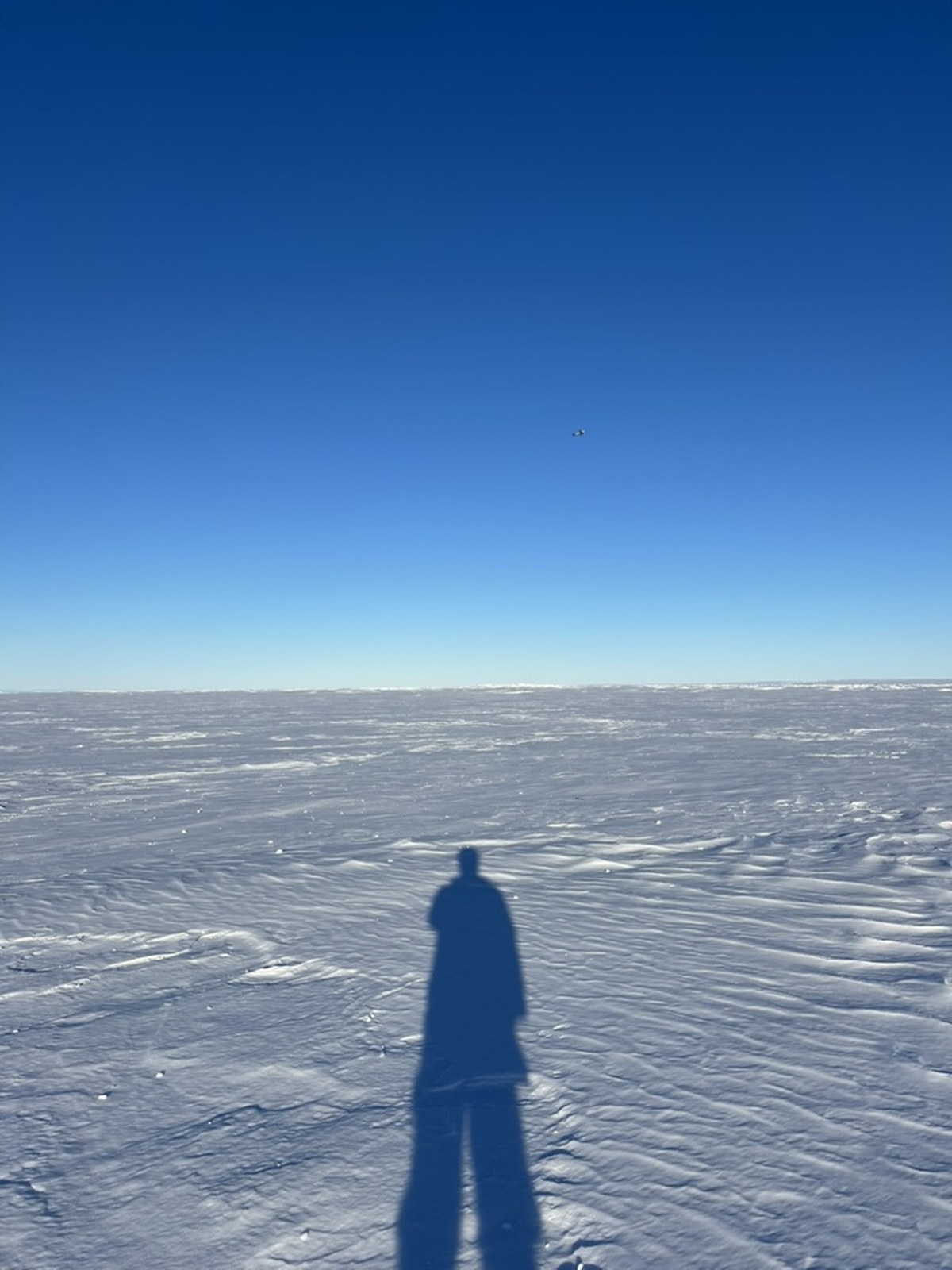
Thwaites Main Trunk, 2025–26. At the hot water drill site — a shadow, a horizon, the helicopter returning.
"다음 세대가 극지의 미래를 그려갈 수 있는 터를 닦고 있습니다."
"Building the ground on which the next generation will shape Korea's polar future."
Korea has been in polar science for more than four decades. The first three were spent catching up. We have now entered the decade of design — when Korean polar science begins to architect, rather than join, the global observational systems that will define what humanity learns about the cryosphere over the coming century.
The work has three faces. We build observational infrastructure that does not yet exist. We use that infrastructure to produce scientific knowledge the world cannot otherwise reach. And we cultivate the people — early-career researchers, and the children who will become them — who will carry both forward when our own careers end.
This last face is the purpose; the first two are its means.